


How smart can a city be?
A smart city uses the potential of digital technologies to make everyday life easier, safer and more sustainable. Infrastructure, mobility, energy and waste disposal – everything is connected.
But a smart city thinks even further ahead: it creates space for education, innovation and personal development. Digital learning opportunities, connected schools and lifelong learning are just as much a part of this as barrier-free access to public spaces and digital services – for each and every citizen. The goal? A liveable, fair and sustainable city where no one is left behind.
The smart city is not a recent invention
As early as the 1970s, cities like Los Angeles were experimenting with the first traffic management systems. This gave rise to the basic idea of using technology to solve urban challenges.
With the introduction of the Internet in the 1990s, there was a stronger focus on information and communication technologies. Various cities began not only to collect data, but also to actively use it to improve services.
With the turn of the millennium and the advent of smartphones, GPS and sensors, the situation changed fundamentally once again: cities could now respond in real time to the data collected, for example on traffic jams, environmental values or electricity consumption. At the same time, large tech companies like IBM and Cisco began to systematically develop the concept of the “smart city” and discover it as a business model. In 2011, the first Smart City Expo World Congress took place in Barcelona and has since become an annual event documenting the development of smart cities.
People take centre stage
But it didn’t stop at technology. People increasingly took centre stage: a smart city needed to not only be efficient, but also inclusive, sustainable and liveable. Ambitious projects were launched in cities such as Barcelona, Copenhagen and Singapore – ranging from digital citizen participation and smart education platforms to green mobility concepts.
Digitalisation is not an end in itself
The development of smart cities is a response to profound social, economic and ecological changes. One of the most important drivers is the rapid growth of urban areas. By 2030, the number of cities with more than 10 million inhabitants worldwide will rise to 43. By 2050, up to 70% of the world’s population is expected to live in cities, leading to enormous challenges in terms of infrastructure, mobility, energy supply and housing. With the rapid growth of large cities, the pressure to design urban spaces efficiently and sustainably is also increasing.
Last but not least, climate change is forcing cities around the world to reduce their CO2 emissions and use resources more intelligently. Digital tools can offer concrete solutions for tackling climate change, for example for traffic management or intelligent energy distribution. Education, security and healthcare can also be improved and made more accessible through digital means.
The latest technologies such as the Internet of Things, artificial intelligence and big data now make it possible to monitor, analyse and effectively control complex urban systems in real time. At the same time, citizens are demanding greater transparency, participation and service quality, which is driving digital innovation in city administration and public services.
Individual fields of action
Smart Governance
Smart governance uses digital platforms to make administration more transparent and citizen-friendly, for example through online participation processes or real-time feedback systems. In addition, data-based analyses enable faster and more informed decision-making in areas such as urban planning, security management and resource allocation.
Smart Environment
Using networked sensors, cities can continuously monitor environmental factors such as air and water quality, noise, and temperature, and implement targeted measures. Smart environment helps to make energy consumption and waste management more efficient and identify ecological risks at an early stage.
Smart Mobility
Intelligent traffic control, connected transport and digital mobility platforms enable flexible, efficient and environmentally friendly movement within cities. Smart mobility not only improves the coordination of public transport and sharing services but also reduces traffic congestion and CO2 emissions in the long term.
Smart People
Digital education, lifelong learning and open access to knowledge strengthen the skills and participation of the population in an increasingly connected world. Cities want to specifically promote digital skills, creative potential and social innovation in order to develop an active, informed and diverse urban society.
Smart Living
Connected devices and smart systems make everyday life in cities safer and more convenient. Smart living allows citizens to benefit from automated household functions, intelligent security solutions and personalised services that improve their standard of living while promoting energy efficiency and sustainability.
What challenges do smart cities face?
Numerous challenges can hinder the development and implementation of smart cities. Data protection and data security are the most important issues here. The large quantities of data used to control urban development must be subject to strict security measures and laws to prevent misuse and loss of privacy. Furthermore, there is also the risk of cyberattacks on critical infrastructure such as transport, energy and water supply, which can cause significant disruption and damage.
Moreover, the development of smart cities requires considerable financial investment and the intelligent use of resources.
Hardware and software, network infrastructure, smart grids, digital platforms for citizen participation, and systems like intelligent street lighting, automatic object recognition and traffic monitoring all cost money.
At the same time, we must ensure that the benefits of digital technologies are accessible to all and that no social divide emerges. Public acceptance also plays a key role. It is important to help people overcome their reservations about modern technology and to guarantee and explain the added value of new developments in a way that is easy to understand.
Today, we see smart cities as dynamic ecosystems that are constantly evolving. This cannot be achieved through technology alone, but rather through the interaction of politics, business, science and civil society.
The path to achieving this goal is never linear, but rather full of experiments, mistakes and learning processes. However, it clearly shows that the city of the future will not only be smart, but also social, sustainable and accessible to everyone.
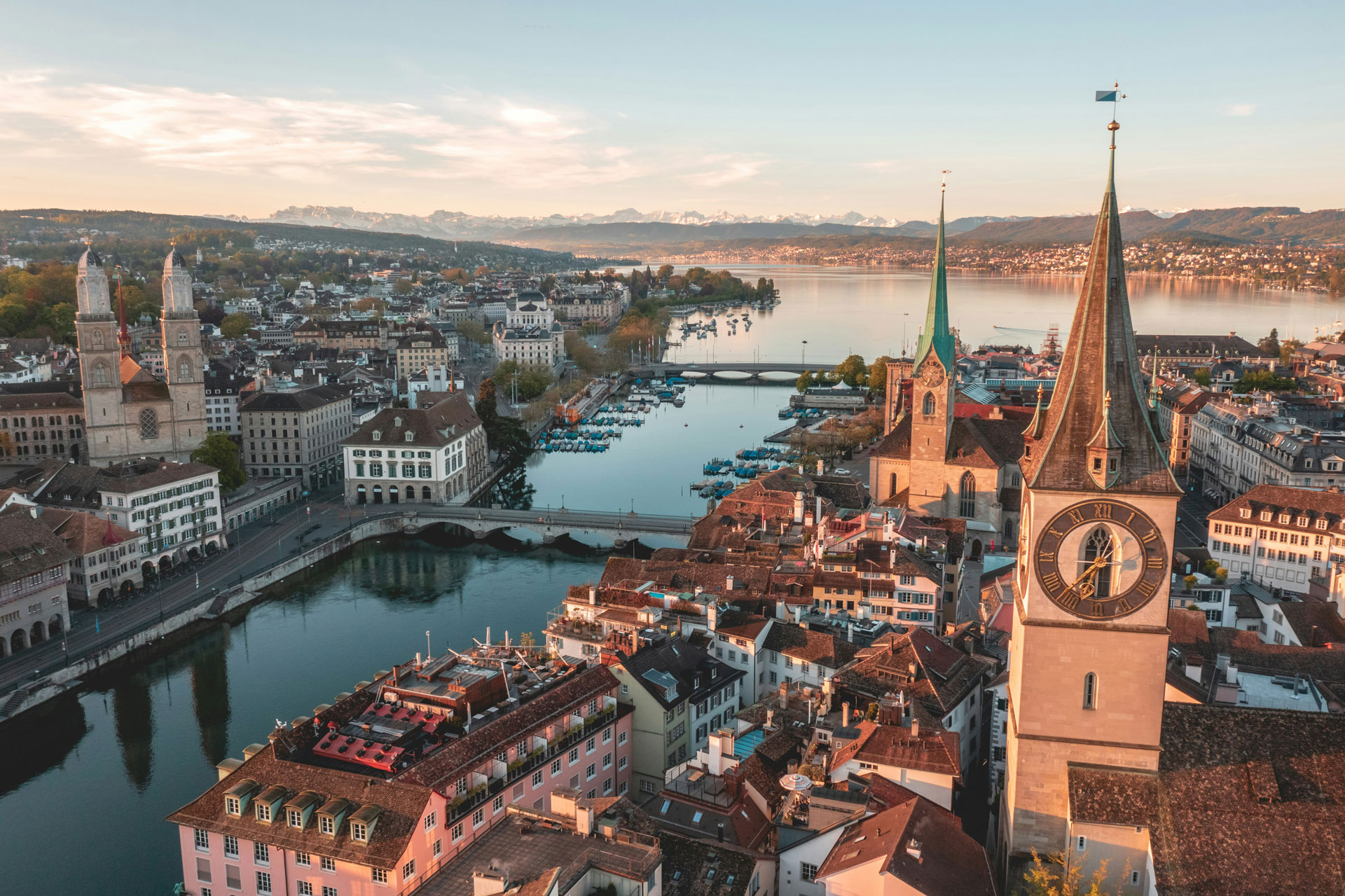
Foto: © Henriquee Ferreira, Unsplash
In 2025, Zurich was named the smartest city in the world for the fifth time in a row in the International Institute for Management Development’s IMD Smart City Index. The ranking is based on a combination of technological data and surveys of residents. A total of 142 cities worldwide were analysed, and Zurich received top ratings across the board for infrastructure, mobility, healthcare, safety, city administration and environmental management. In the “Structures” category, the Swiss city even received the maximum rating of AAA and an AA for technology.
The city is consistently focussed on data-based solutions to make mobility, energy, administration and the environment more sustainable and efficient. In public spaces, sensors continuously collect traffic and environmental data, which is analysed and used in real time, for example to dynamically control traffic or optimise waste disposal.
A key element is seamless mobility: public transport, rental bikes, e-scooters and car-sharing services can all be booked via a shared platform. Artificial intelligence helps to adapt timetables to actual demand. At the same time, the power grid has been modernised so that renewable energy sources can be integrated efficiently. Buildings are increasingly being equipped with digital energy management systems to reduce consumption and conserve resources.
The city administration is also digitally accessible. Many administrative procedures can be completed online, and citizens are actively involved in decision-making processes.
In this way, Zurich demonstrates how a connected city not only drives technological innovation, but also strengthens transparency, participation and ecological responsibility.
Picture: © Henriquee Ferreira, Unsplash
IMD Smart City Index 2025
The Smart City Index, also known as the IMD Smart City Index, is a ranking that evaluates cities around the world in terms of their progress in digitalisation and smart city initiatives. It is compiled by the International Institute for Management Development (IMD), a renowned business school in Lausanne, Switzerland.

Smart technology as a factor for inclusion
The aim of the Virtual Warsaw technology is to make it easier for blind and visually impaired citizens to find their way around Warsaw, to improve their independence and quality of life, and to enable them to experience their city to the full.
Warsaw has around 40,000 residents with visual impairments whose access to important services and cultural and educational facilities has been severely restricted until now. Approximately 80% of this population group is therefore unemployed. An important factor contributing to these high unemployment rates is that it would take around 65 to 95 hours of work with an individual trainer to learn how to navigate the city safely.
User-centred development by a local company
A micro-navigation system based on Internet of Things (IoT) technology acts as a personal guide and assistant that enables any smartphone owner to receive written or verbal information about their surroundings, such as the location of bus stops, the number of trains arriving, the entrance to museums or where to queue at municipal offices. To do this, the city deployed a network of hundreds of thousands of beacon sensors equipped with next-generation Bluetooth. Warsaw’s city administration teamed up with NGOs like the Polish Association of the Blind, universities, and other visual impairment experts to better understand the challenges and needs of the target group, as well as with specialists in user experience (UX) design, accessibility, and software development. A small local company was then commissioned to develop the system and tailor it to the needs of the target group. Close cooperation with users made it possible to eliminate early errors and respond precisely to the wishes of the visually impaired. This process showed that user-centred development is an important factor for success.
Although Virtual Warsaw is still in pilot mode, it is already creating opportunities for greater independence among the visually impaired population.
The project is highly transferable, as the challenges faced by people with visual impairments are the same in every city.

Picture: © Mathias Kolta, Smart City Münster
Münster is known throughout Germany as a cycling city: bicycle travel accounts for around 47% of all trips made. The city offers an extensive network of cycle paths, numerous bicycle priority streets, and, with its car-free promenade, a central, safe circular route for cyclists. This infrastructure is complemented by one of the largest bicycle parking stations in Germany with space for over 3,500 bicycles. Münster has received several awards for its bicycle-friendly mobility and is considered a pioneer of the mobility revolution.
Cycling smoothly through the city, to university, to the market, to Lake Aasee
Against this backdrop, the Leezenflow project – a digital system to support bicycle traffic at traffic lights – was created. LED displays show cyclists around 150 metres before the intersection whether they will still make it through the lights at their current speed. The project came out of a citizen hackathon and was implemented in collaboration with the city, the University of Münster and IT partners. Following a successful prototype on the promenade, Leezenflow was installed at nine additional locations in 2023. Leezenflow uses a technology known as vehicle-to-everything (V2X) to communicate with traffic lights. This technology was developed worldwide to enable buses, emergency vehicles and cars to communicate with traffic lights and infrastructure. Leezenflow uses this technology for bicycle traffic and tests the new data transmission in live operation.
Leezenflow improves the flow of traffic, reduces unnecessary stops and increases safety because it reduces the number of red light violations. It promotes comfortable and safe cycling and supports environmentally friendly mobility in Münster. As an open-source system, it is flexibly expandable and a forward-looking example of smart transport solutions in bicycle-friendly cities.
4 Bad Hersfeld
Street lighting that adapts
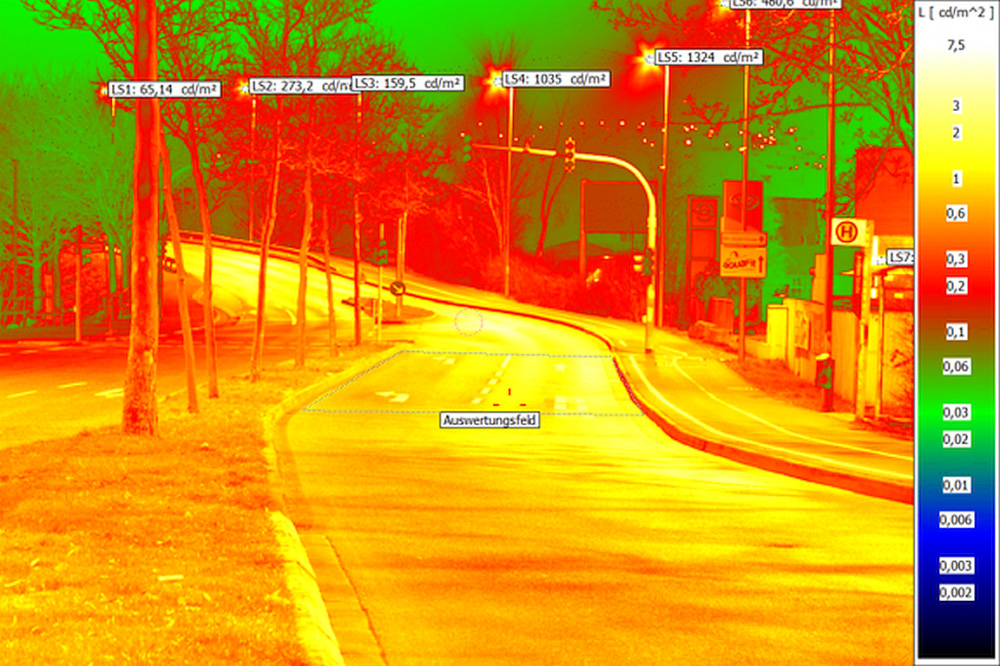
This innovative smart street lighting project aims to make public lighting in the Hessian town more efficient, environmentally friendly and citizen-friendly. Lighting in public spaces should be bright, but also conserve energy. The safety of citizens must be taken into account, but light pollution and CO2 emissions should be minimised. Additional objectives can be described using keywords like “insect-friendliness”.

Pictures: © Urban Lightning Innovations GmbH, Technische Universität Berlin
Greater safety and lower energy consumption
As part of the project, conventional streetlights are being replaced by modern LED lights equipped with sensors. The use of energy-efficient light sources alone has resulted in average savings of 77% compared to the current situation. These values could be increased to 86% in certain situations through the use of dynamic control.
The new generation of lights allows the light intensity and colour temperature to be dynamically adjusted depending on traffic volume, weather conditions and time of day. For example, a warm-white light is used in residential areas, while a brighter light is used on main roads. If a road is empty and unused, the lighting automatically dims. These adjustments increase road safety while at the same time reducing light pollution.
Consciously controlling energy – via app at your own doorstep
One unique characteristic of the project is the involvement of local citizens. In the Eichhof housing estate, residents can use a specially developed app to individually control the lighting in front of their homes. They have the opportunity to adjust the light intensity, colour temperature and light distribution according to their needs. This function raises awareness of energy consumption and enables users to directly and actively shape the city.
The data collected from the app is then used in the “UrbanPulse” urban data platform, which allows for centralised management and analysis. The project received the renowned Smart 50 Award, which honours forward-looking smart city initiatives around the globe, for the innovation implementation of this solution.
Fotos: © Urban Lightning Innovations GmbH, Technische Universität Berlin
Picture: © Waag Futurelab
Global demand for building materials is expected to more than double by 2060 – from 79 to 167 billion tonnes (OECD, 2019). Cities play a central role in this, not only as consumers but also as potential sources of raw materials.
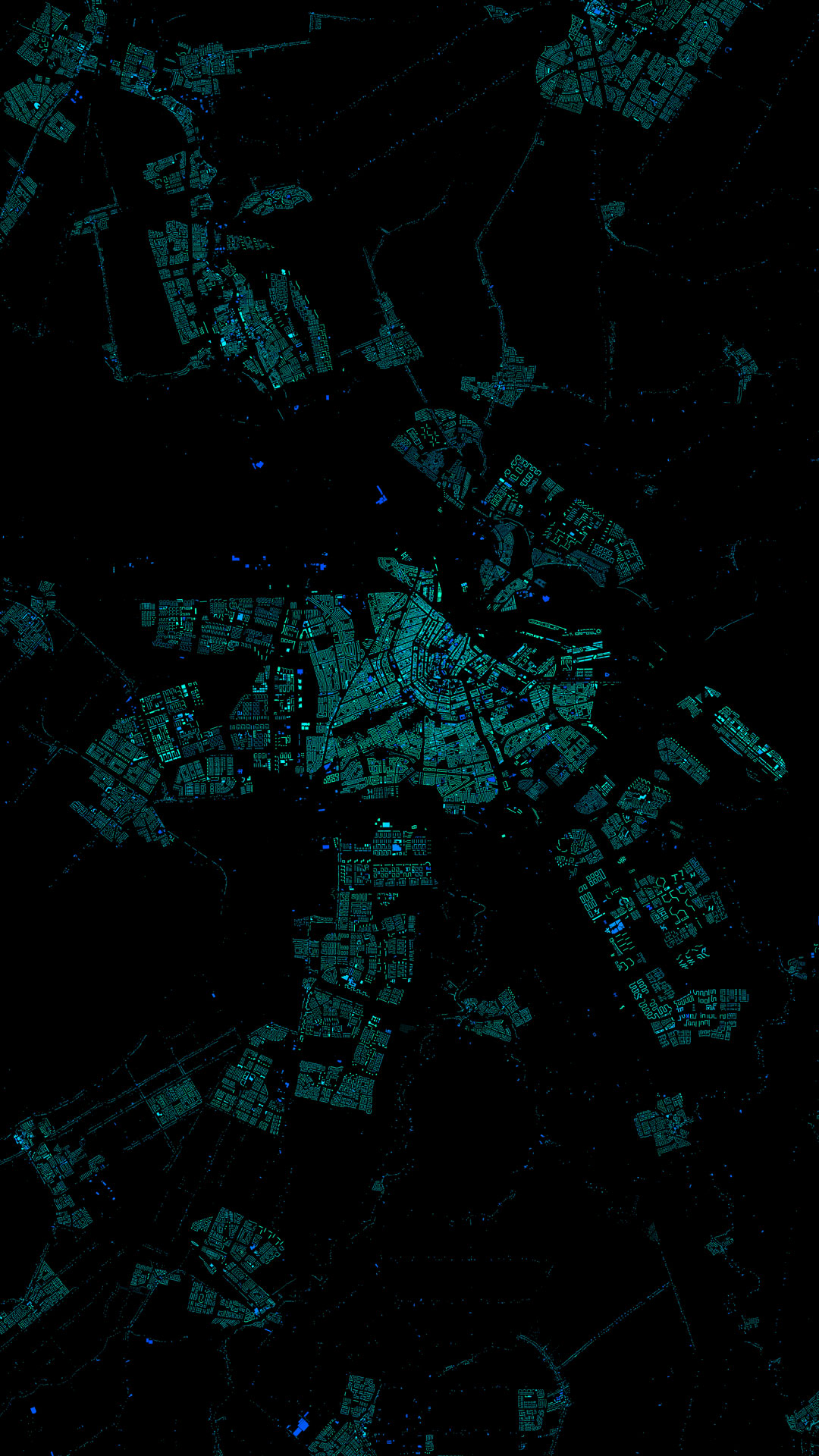
MIT’s Urban Mining project in Amsterdam focuses on analysing building data and materials using artificial intelligence. Previous models have used building types as archetypes to estimate demolition materials, but renovations and the entire life cycle of buildings are rarely taken into account. In this project, building data is linked to waste data. Three data points are crucial here: material type, quantity and location. However, at the moment, waste data is often difficult to access or only superficially recorded, so partners who can provide the relevant data are currently being sought for this model project.
A new town hall made from the old town hall
In Germany, too, urban mining is becoming increasingly important as a strategy for recovering raw materials from existing buildings and infrastructure. Research institutes such as the Federal Environment Agency emphasise the role of urban spaces as “raw material stores of the future” and call for the systematic recording and recycling of building materials.
A practical example is the town hall in Korbach, where materials from the old building were effectively reused in the construction of the new building with the help of the Urban Mining Index. A total of 9,848 tonnes of mineral material was recovered, 61% of which was used directly in the new building. This included around 1,000 tonnes of high-quality recycled concrete, which was used for the supporting structure and façade. In addition, around 5,000 tonnes were used for the excavation pit and to level the ground.
Research is currently focusing on digital tools, such as material databases and building passports, to better control material cycles and integrate urban mining into municipal planning.
Kilogramm pro Quadratmeter

Aschaffenburg 2.0 is an interactive digital city laboratory for researching and communicating the city’s history. The aim is to work together to paint a diverse picture of the past and to highlight individual perspectives on the history of Aschaffenburg.
All interested citizens are invited to contribute their own stories about the city’s history on the platform. The focus is on personal experiences, memories or research that relate to the city and its development. The format of the contributions is deliberately open, and users can upload photos, videos, texts, interviews or audio formats like podcasts.
City history becomes personal
The project accompanies the ongoing academic research into the history of Aschaffenburg in the 19th and 20th centuries and sees itself as a complementary platform for participatory urban historiography. The focus is not only on historical facts, but also on emotional, critical and personal perspectives on urban life and its transformation.
The aim is to connect the past and the present and document both for the future.
Low-threshold participation for all citizens
It’s easy to participate: submissions can be created and published directly on the platform. All of the city’s eras, historical events, monuments, squares and buildings, personalities, associations, and institutions can be edited, and personal stories about the city that recount memories of childhood and youth in Aschaffenburg are also welcome. It is possible to assign a historical era and a thematic keyword to your own content. Those who cannot or do not wish to submit their contributions digitally can simply bring them to the “digital shop”, where they will be digitised.
After review, the contributions will be made publicly visible. Exchange is expressly encouraged, as comments and feedback on other content can be shared directly on the platform. There are currently more than 130 contributions available in the online archive, with new ones being added every day.
An interactive map also helps to geographically locate the contributions. The mobile app “Aschaffenburger Geschichten” allows users to experience the contents of the city lab while on the move in the city. The map provides access to audio files, push notifications and the option to follow and create different routes, providing information about places and events as well as personal life stories. The app contains a selection of city lab content, which will be expanded and updated in the future.

Picture: © Aschaffenburg 2.0 (aschaffenburgzweinull.stadtarchiv-digital.de)
A key motivation for introducing the Ushahidi platform in Uganda was the lack of transparent channels through which citizens could report grievances. Many problems, such as police violence, poor medical care and a lack of infrastructure, were rarely documented or ignored by the authorities. Ushahidi made it possible for the first time to systematically collect and visualise this information and make it available to the public. The platform is based on a crowdsourcing approach, whereby people can report incidents via text message, email, web form or social media. These reports are then displayed on an interactive map and can be filtered by region, topic or date.
Political decisions require good underlying data
Ushahidi users in Uganda are very diverse. They include active citizens, local NGOs, journalists, election observers and international organisations. The SMS service has been particularly effective in rural areas where other means of communication are scarce. Radio stations have also used the platform to highlight current issues affecting the population and discuss them publicly.
The advantages of Ushahidi are numerous. First, the platform increases the transparency and accountability of public authorities, as documented grievances can no longer be easily ignored. Second, it promotes citizen participation by enabling people to play an active role in shaping their society. Third, it improves the underlying data that serves as the basis for political decisions and development projects by providing information that was often lacking before. Lastly, it also enables aid organisations to respond more quickly and in a more targeted manner.

Picture: © Frank van den Bergh (iStock)
The use of smart technologies in pilgrim management in Mecca has fundamentally changed the organisation of the hajj (the obligatory pilgrimage for Muslims at a specific time) and umrah (voluntary pilgrimage). Millions of people (1,833,164 pilgrims attended the hajj in 2024) can now be looked after in a much safer and more coordinated manner. Intelligent monitoring systems and AI-supported analyses record movement flows around central locations such as the Kaaba in real time. This allows bottlenecks to be identified and managed at an early stage and emergency services to be directed to where they are needed without delay.
Digital wristbands and mobile apps offer helpful functions for pilgrims. They display routes, prayer times and health information and allow for direct emergency calls if necessary. Some systems even monitor vital signs, which facilitates rapid assistance in medical emergencies. At the same time, the authorities gain valuable data for planning and optimisation. Movement patterns, supply requirements and security operations can be better analysed and controlled in a more targeted manner in the future.
The combination of technology and organisation not only improves safety but also comfort for pilgrims and administrative efficiency. Mecca is thus setting standards for modern, digitally supported pilgrim management.

Picture: © SULTAN (Pexels)
Around 4 billion people live in cities today. But for around 1 billion of them, this means no permanent residence, no secure supply of basic necessities, no right to a home – because they live in informal settlements. With around 100,000 inhabitants, Rocinha is Brazil’s largest favela (marginalised neighbourhood) and is characterised by dense, informal development with many small alleys, undiscovered shortcuts and makeshift shelters.
Favelas 4D is a research project by the Senseable City Lab at the Massachusetts Institute of Technology (MIT), carried out in collaboration with the city of Rio de Janeiro. The favela was mapped using 3D laser scanning technology (LiDAR). This data provides a digital image of the locations, enabling urban analysis and planning – because the often improvised construction methods remain invisible on traditional maps and in Google Earth. The absence of the favelas on the maps is also representative of the lack of awareness of the needs of their inhabitants.
Structural improvement through visibility
The scanning enables more precise planning and improvement of infrastructure, such as connections to electricity, drinking water and sewage networks. The aim is to improve the living conditions of the residents and enable them to be recognised as the official owners of their land and to obtain formal postal addresses.
Self-efficacy via app
The Smart Favela app from the French company Toolz gives residents of informal settlements the opportunity to actively shape their environment. They can submit their own suggestions and vote directly on urban development measures. This not only creates a direct line of communication with the city administration, but also a better understanding of the actual challenges on the ground.
This app achieves what large infrastructure projects in Rio de Janeiro have not yet managed to do: genuine legitimacy. Active participation by the population creates acceptance – and thus fertile ground for sustainable investment in the neighbourhoods.

Picture: © MIT – Massachusetts Institute of Technology
Picture: © Technologiestiftung Berlin
How can the exchange of information be ensured and urgent action communicated in the event of a large-scale power outage?
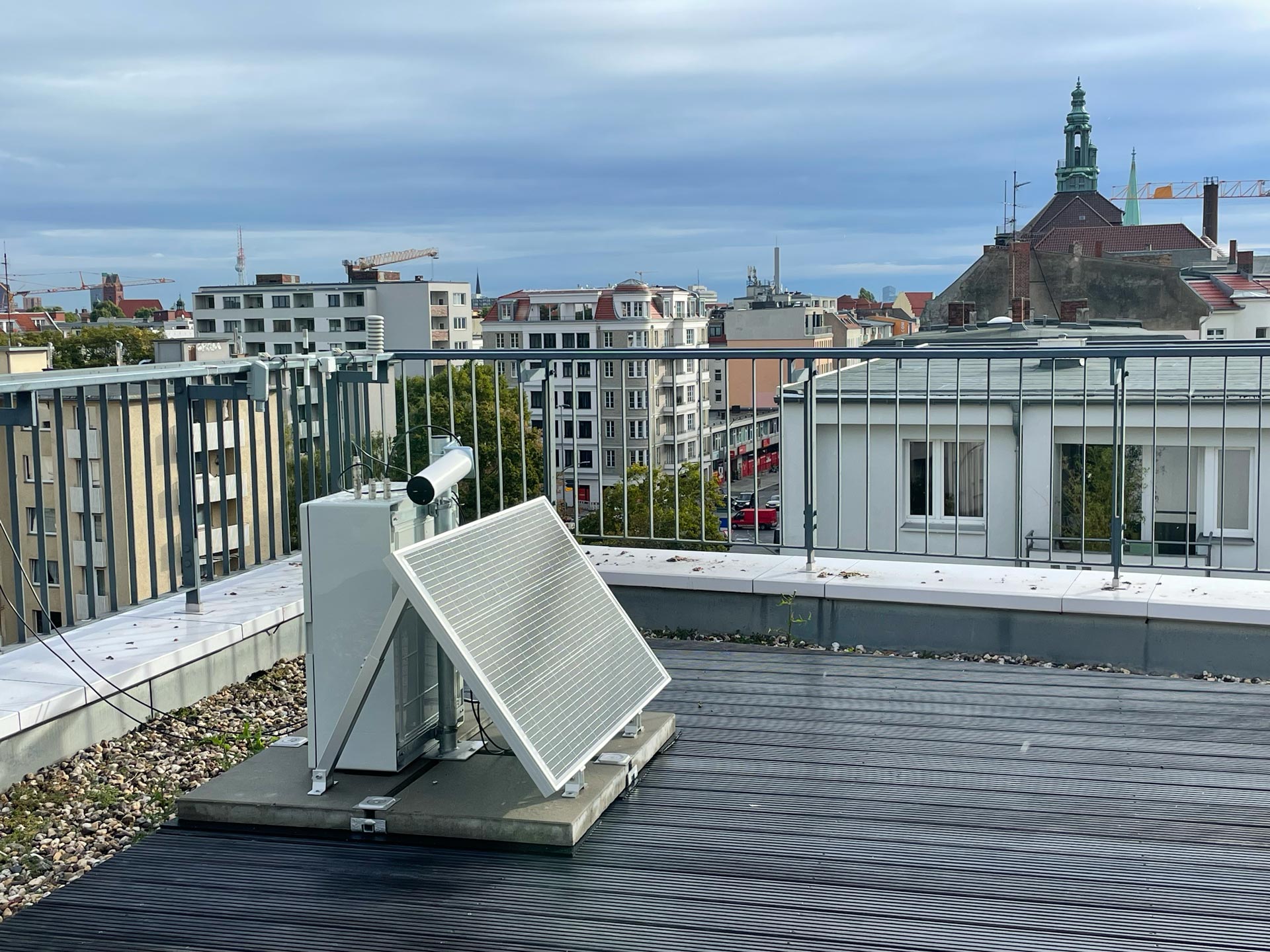
In order to maintain communication even in exceptional circumstances, such as a prolonged power outage, a robust infrastructure that functions independently of the regular power grid is necessary. A system that provides public Wi-Fi via solar- or battery-powered hotspots is currently being tested in an area of Berlin. It enables emergency services, systemically relevant institutions and the population to exchange information and coordinate important measures using smartphones.
10 Berlin
Mit der Kiezboxim Notfall online bleiben
Wie lässt sich bei einem großflächigen Stromausfall der Informationsaustausch sicherstellen und dringender Handlungsbedarf weitergeben?
Stromausfall kommunikationsfähig zu bleiben, ist eine robuste Infrastruktur notwendig, die unabhängig vom regulären Stromnetz funktioniert. In einem Berliner Stadtgebiet wird derzeit ein System getestet, das über solar- oder batteriebetriebene Hotspots ein öffentliches WLAN bereitstellt. Dadurch wird es Einsatzkräften, systemrelevanten Einrichtungen sowie der Bevölkerung ermöglicht, mithilfe von Smartphones Informationen auszutauschen und wichtige Maßnahmen zu koordinien.
Foto: © Technologiestiftung Berlin
